

The Legend of the
Persian Mare
The fastest horse in
the world.
Introduction
In an ancient, vibrant kingdom where colors danced in the streets, a wealthy horse trader's son (1) also known as Shahriyar (2) ordered three racehorses from a world-reknown breeder from Lexington, Kentucky. (3) The breeder had bred them for speed, purity and grace, to compete at the first legendary horse race (4) among the Arab states to have been held during the Spring Equinox festivities in March. However, whispers of dissent among those who opposed his idea threatened to overshadow the planned event. As the day of the race approached, the newly crowned Saudi king found himself not only without his expensive race horses, he also found himself without his kingdom when the horse breeder's sister (5) received a toxic, explosive drug order (6) instead of the Raspberry Beret originally suggested for Shahriyar. Unfortunately, the colorful, purple Beret was never sent (7), and a toxic, explosive White Bonnet for Shahriyar's twin sister "Scheherazade" from 1,001 Arabian Nights was taken from the Paris Hatmaker & delivered by the Giant Wren to the Persian Princess in Isfahan.
(1) See the 2007 novel Blood of Flowers, where he is known as "Fereydoon."
(2) 1,001 Arabian Nights
(3) The twin sister of the Hatmaker in Paris, France.
(4) See the 2004 movie Hidalgo.
(5) A world-renown hatmaker in Paris, France. See also, The Hatmakers a novel by Tamzin Merchant
(6)uranium, glass, pcp, sweetener (so it would be eaten by desert ants)
(7) It is still in the Paris hatshop of its original maker.

0
Ballyagran, Ireland
1700 AD


Vlad III
Imogen
David
When Shahriyar's enemies decided to insist on a deadly, toxic Bonnet for his "bride" Shahrazad, rather than the festive raspberry-colored beret (for himself) suggested by the renowned overseas hat maker, receives much more than he bargained for when the White Bonnet ends up in the hands of his twin sister. At Imogen's insistence, the overseas hat maker spent one month "carving" the explosive & toxic bonnet designed for the King. The race horses Shahriyar had ordered from Kentucky were also delayed for a one month period of time, during which time the Hindu god "Indra," drove them from Lexington to the shores of Ocean City, New Jersey where they waited with the "flying carousel horse," and 3 of the King's thoroughbred mares, only to wind up sailing across the ocean to Shiraz, Iran at the request of the [then] Persian King who wanted a "flying horse" as a gift for his daughter the Princess at their Spring Equinox festivities. Their stories known as "The Enchanted Horse" & "Prince Ahmad & the Fairy Pari Banu" can be found in 1,001 Arabian Nights.
A sunny day in May
Abraham waited by the shore near a Giant Teak Tree & an Indian (teak) wood carver hired to carve carousel horses out of the Teak Tree for a magic carousel in Paris. The carver modeled his carousel horses after the Persian Mare, but unfortunately, the carved horses were coated in poisoned gold.
Beyond the Sea ~ Bobby Darin
01
Ocean City, NJ
1700 AD
"Now that's a horse that has been very thoroughly bred!"
~ Abraham
The Hindu god Indra drove the race horses from their Lexington breeder to Ocean City, New Jersey to meet a sailing ship headed to the port closest to the modern-day city of Shiraz, Iran. Currently known as “Bushehr,” this port city lies on the southern coast of Iran and is approximately 180 miles southwest of Shiraz,
When Indra & Abraham arrived in Shiraz (1) with a poisoned gilded carousel horse & the Persian Mare, the Hindu god asked for the Persian King's daughter in exchange for what he called a "flying horse." As it turned out, there was no flying horse - only the speedy racehorses the King ordered from Kentucky and a carved teak wood carousel horse coated in poisoned gold. When Indra arrived in Shiraz with the Persian Mare and the Carousel Horse, the teak wood Carousel horse dripped off its poisoned gold to reveal that it was painted white (over the teak wood). The illustrations in 1,001 Arabian Nights of “enchanted” or flying white horses are this carved teak wood carousel horse originally intended for the Magick Carousel of Ole Paris.
(1) See "The Enchanted Horse" in 1,001 Arabian Nights

02
Kentucky to Isfahan
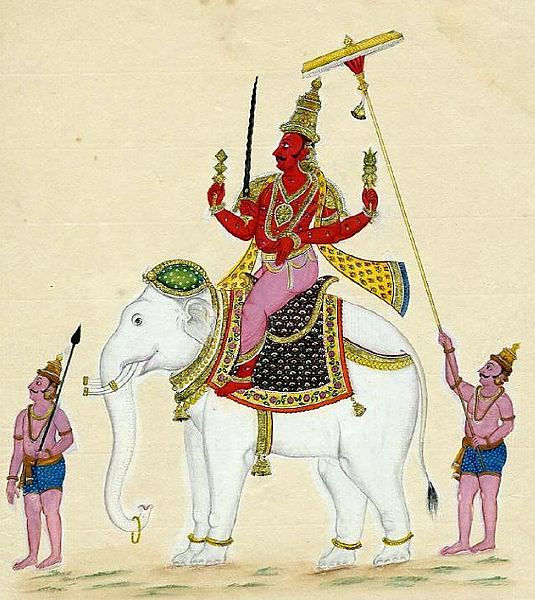


Indra
Abraham
Soltan Hoseyn
Prince Ahmad & Fairy Pari Banu on the Persian Mare.
Find the story in The Annotated Arabian Nights: Tales from 1001 Nights
When the young Prince Ahmad examines the golden carousel horse, his father, the Persian King pushes down on the horse's pole (intended for carousel movement) and the [painted white] teak carousel horse "spits" toxic grease on the Prince's face. Hence Abraham's warning, "Never look a gift horse in the mouth!" Prince Ahmad & Astraea eventually leave Shiraz on the Persian Mare (so Astraea can give Aladdin's dad her egg) in the direction of Mosul & the Temple of the Red Lion, according to Astraea's wish.
Legend has it Prince Ahmad "left" the Persian Mare in Isfahan so no one would think "he ran" ("I ran") from Shiraz to Isfahan. Hence the name change from Persia to "Iran" around 1700 AD.
03
Persia
The Persian Princess in Isfahan

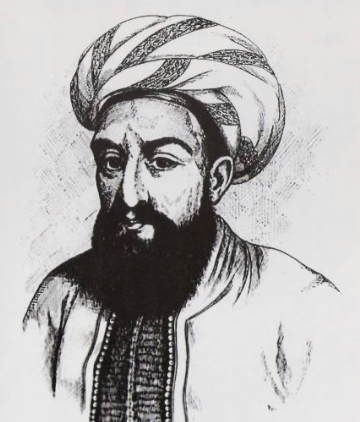
The Persian Princess
King Shahriyar
Eventually, the toxic Bonnet is delivered by the Giant Wren to the Persian Princess, also known as King Shahriyar's twin sister, Shahrazad of 1,001 Arabian Nights. Ultimately, the Persian Princess waits 9 months, until Prince Ahmad's Persian surrogate gives birth to his baby boy from Astraea's egg (the child known as "Mowgli" until he left the jungle and was then known as "Aladdin.") (1), then sets the toxic Bonnet on fire until it explodes into the night sky. The explosion leaves a large crater in the Persian desert, opening a uranium steam vent in the sand combined with the ingredients of the Bonnet - a toxic combination that had been sweetened by the Paris hatmaker so it would be eaten by desert ants. Unfortunately, the ants never consumed even one grain! Immediately after the Bonnet's explosion, the desert was filled with hoards of addicts who formed a circle around the hole left by the Bonnet's explosion and spent the next 300 years consuming toxic drugs, chemicals and sand until Iran built a uranium enrichment facility to contain the steam vent emissions in the Iranian desert.
(1) The Jungle Book by Rudyard Kipling
04
The Arabian Stallion
The Black Stallion & The Island Stallion known as "Flame," are two of the most well-known Arabian stallions bred from the Persian Mare and Bucephalus.


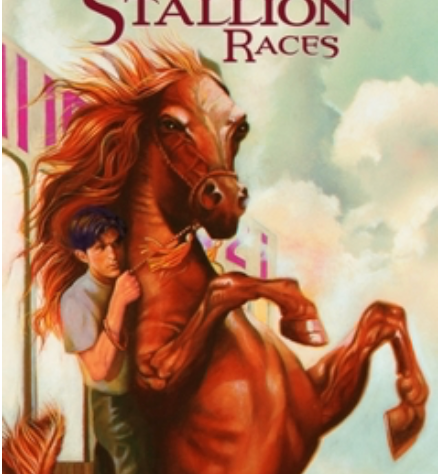
The Persian Mare
Bucephalus
The Black Stallion
The Island Stallion

Shahriyar relocates to Saudi Arabia and establishes a horse breeding facility in the valley of a mountain oasis where he keeps the Persian Mare alive for hundreds of years. Eventually, after they imprison Alexander in a large sarcophagus for persecution of gay individuals & poisoning others with Bucephalus' toxic, old harness, (1) Shahriyar uses the saved sperm of the former war horse of Alexander the Great (2) to breed with the Persian Mare. Shahriyar ends up with two large stallions, one black and one red. The "gay king's" horses are written about by Walter Farley beginning in 1941 as "The Black Stallion," and "The Island Stallion." The red, Island Stallion (known as "Flame") raced as "Secretariat" and won the Triple Crown in 1973, but is not depicted in the 2010 movie of the same name. See old video footage of the Island Stallion raced as "Secretariat" in this YouTube video. The Island Stallion spent his last few years standing at Claiborne Farm as "First Samurai" until he passed away peacefully on his island home around 2024.
The Persian Mare's two sisters remained at the Lexington, Kentucky farm where they were originally bred, known as Claiborne Farm. Although all three horses were bred for racing, the only one ever raced was called "Seabiscuit," and can be seen in the 2003 movie Seabiscuit, based on the 1999 book by the same name. Unfortunately, others believed the mares could not be raced, as they were considered "female" horses (perhaps too fragile for running races). Eventually, in the 1930s, the 3rd mare's name was changed to that of her male stable-mate, "Seabiscuit," and run as a male horse or "gelding" for many years. The 2nd mare never raced and was featured in the 2022 historical fiction novel, Horse by Geraldine Brooks. The mare was portrayed as a breeding stallion and a successful race horse for many years (the race wins were attributed to the wrong horse - her "Seabiscuit" sister! The mysterious, 1954 equestrian oil painting is a "fake," and depicts the mare with male genitalia, when in reality, her eggs were taken & the offspring were used for racing instead.
(1) The Rune known as "Perthro."
(2) Alexander the Great, in the 21st Century is also known as the American actor "Paul Walker," best known for his role as Brian O'Connor in the Fast & the Furious movie franchise.